Reconciliation (Confession)

"On the evening of that day, the first day of the week," Jesus showed himself to his apostles. "He breathed on them, and said to them: 'Receive the Holy Spirit. If you forgive the sins of any, they are forgiven; if you retain the sins of any, they are retained"' (Jn 20:19, (22-23).
The forgiveness of sins committed after Baptism is conferred by a particular sacrament called the sacrament of conversion, confession, penance, or reconciliation.
The sinner wounds God's honor and love, his own human dignity as a man called to be a son of God, and the spiritual well-being of the Church, of which each Christian ought to be a living stone.
To the eyes of faith no evil is graver than sin and nothing has worse consequences for sinners themselves, for the Church, and for the whole world.
To return to communion with God after having lost it through sin is a process born of the grace of God who is rich in mercy and solicitous for the salvation of men. One must ask for this precious gift for oneself and for others.
The movement of return to God, called conversion and repentance, entails sorrow for and abhorrence of sins committed, and the firm purpose of sinning no more in the future. Conversion touches the past and the future and is nourished by hope in God's mercy.
The sacrament of Penance is a whole consisting in three actions of the penitent and the priest's absolution. the penitent's acts are repentance, confession or disclosure of sins to the priest, and the intention to make reparation and do works of reparation.
Repentance (also called contrition) must be inspired by motives that arise from faith. If repentance arises from love of charity for God, it is called "perfect" contrition; if it is founded on other motives, it is called "imperfect."
One who desires to obtain reconciliation with God and with the Church, must confess to a priest all the unconfessed grave sins he remembers after having carefully examined his conscience. the confession of venial faults, without being necessary in itself, is nevertheless strongly recommended by the Church.
The confessor proposes the performance of certain acts of "satisfaction" or "penance" to be performed by the penitent in order to repair the harm caused by sin and to re-establish habits befitting a disciple of Christ.
Only priests who have received the faculty of absolving from the authority of the Church can forgive sins in the name of Christ.
The spiritual effects of the sacrament of Penance are:
- reconciliation with God by which the penitent recovers grace;
- reconciliation with the Church;
- remission of the eternal punishment incurred by mortal sins;
- remission, at least in part, of temporal punishments resulting from sin;
- peace and serenity of conscience, and spiritual consolation;
- an increase of spiritual strength for the Christian battle.
Individual and integral confession of grave sins followed by absolution remains the only ordinary means of reconciliation with God and with the Church.
Through indulgences the faithful can obtain the remission of temporal punishment resulting from sin for themselves and also for the souls in Purgatory.
The Vine and the Branches.
Eucharist
EUCHARIST
As sacrifice, the Eucharist is also offered in reparation for the sins of the living and the dead and to obtain spiritual or temporal benefits from God.
Anyone who desires to receive Christ in Eucharistic communion must be in the state of grace. Anyone aware of having sinned mortally must not receive communion without having received absolution in the sacrament of penance.
Communion with the Body and Blood of Christ increases the communicant's union with the Lord, forgives his venial sins, and preserves him from grave sins. Since receiving this sacrament strengthens the bonds of charity between the communicant and Christ, it also reinforces the unity of the Church as the Mystical Body of Christ.
The Church warmly recommends that the faithful receive Holy Communion each time they participate in the celebration of the Eucharist; she obliges them to do so at least once a year.
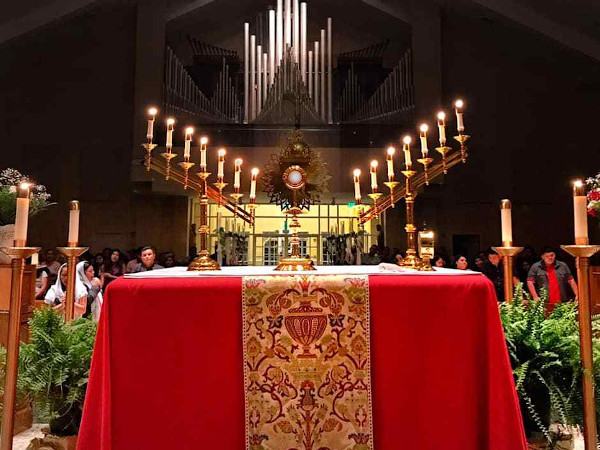
Because Christ himself is present in the sacrament of the altar, he is to be honored with the worship of adoration. "To visit the Blessed Sacrament is . . . a proof of gratitude, an expression of love, and a duty of adoration toward Christ our Lord" (Paul VI, MF 66).
Having passed from this world to the Father, Christ gives us in the Eucharist the pledge of glory with him. Participation in the Holy Sacrifice identifies us with his Heart, sustains our strength along the pilgrimage of this life, makes us long for eternal life, and unites us even now to the Church in heaven, the Blessed Virgin Mary, and all the saints.
While they were eating, Jesus took bread, said the blessing, broke it, and giving it to his disciples said, "Take and eat; this is my body."
Confirmation
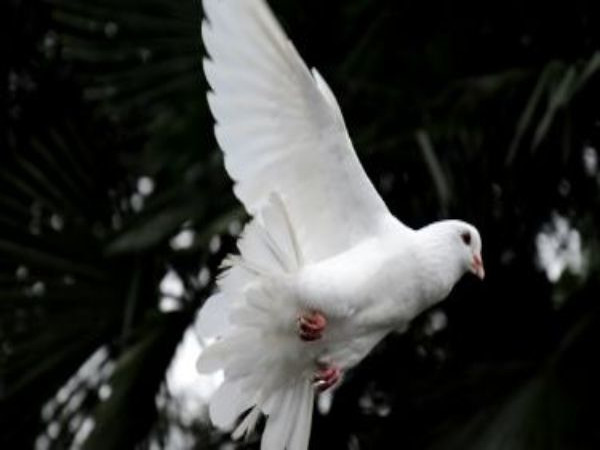
"Now when the apostles at Jerusalem heard that Samaria had received the word of God, they sent to them Peter and John, who came down and prayed for them that they might receive the Holy Spirit; for it had not yet fallen on any of them, but they had only been baptized in the name of the Lord Jesus. Then they laid their hands on them and they received the Holy Spirit" (Acts 8:14-17).
Confirmation perfects Baptismal grace; it is the sacrament which gives the Holy Spirit in order to root us more deeply in the divine filiation, incorporate us more firmly into Christ, strengthen our bond with the Church, associate us more closely with her mission, and help us bear witness to the Christian faith in words accompanied by deeds.
Confirmation, like Baptism, imprints a spiritual mark or indelible character on the Christian's soul; for this reason, one can receive this sacrament only once in one's life.
In the East this sacrament is administered immediately after Baptism and is followed by participation in the Eucharist; this tradition highlights the unity of the three sacraments of Christian initiation. In the Latin Church this sacrament is administered when the age of reason has been reached, and its celebration is ordinarily reserved to the bishop, thus signifying that this sacrament strengthens the ecclesial bond.
A candidate for Confirmation who has attained the age of reason must profess the faith, be in the state of grace, have the intention of receiving the sacrament, and be prepared to assume the role of disciple and witness to Christ, both within the ecclesial community and in temporal affairs.
The essential rite of Confirmation is anointing the forehead of the baptized with sacred chrism (in the East other sense-organs as well), together with the laying on of the minister's hand and the words: "Accipe signaculum doni Spiritus Sancti" (Be sealed with the Gift of the Holy Spirit.) in the Roman Rite, or "The seal of the gift that is the Holy Spirit" in the Byzantine rite.
When Confirmation is celebrated separately from Baptism, its connection with Baptism is expressed, among other ways, by the renewal of baptismal promises. the celebration of Confirmation during the Eucharist helps underline the unity of the sacraments of Christian initiation.
For more information about CONFIRMATION, please see Catechism of the Catholic Church- Confirmation, articles 1285-1314
Marriage & Holy Orders
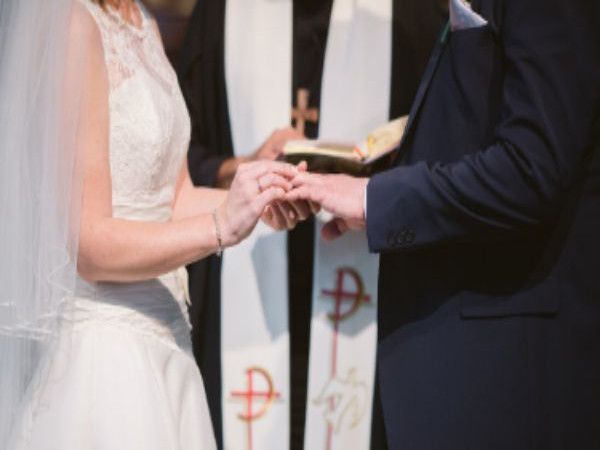
Couples who wish to be married by our Pastor or in our Church must contact the parish office at least six months before the date of the wedding. Couples must attend Marriage Preparation with our Pastor and attend Diocese Pre-Cana classes.
Anointing of the Sick
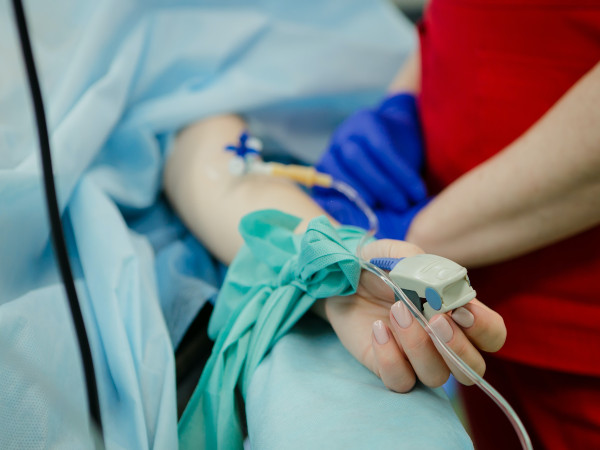
In the Church's Sacrament of Anointing of the Sick, throughthe ministry of the priest, it is Jesus who touches the sick to heal them from sin – and sometimes even from physical ailment. His cures were signs of the arrival of the Kingdom of God. The core message of his healing tells us of his plan to conquer sin and death by his dying and rising.